Benefits of Using Resistance Bands – FLEXAFIT
One of the main benefits of resistance bands is that they are incredibly versatile. Resistance bands allow you to do a full-body workout in the comfort of your own home. Similar to weight training, resistance bands help build muscle mass and tone. Resistance bands are also amazing to use to help stretch and warm up your muscles before a workout which will increase flexibility and range of motion during your workout. Resistance bands are great for all fitness levels from beginners just starting their fitness journey, to pro athletes. One of the reasons why they’re great for beginners is that they’re super affordable and easy to transport. In addition, pregnant women can also benefit from using resistance bands because they are able to do light exercises without doing intense weight-training.
- Work of Your Core
- Training Stability
- Cost-Effective
- Good for Post Injury Strengthening
- Increase Mobility
- Easy to Transport
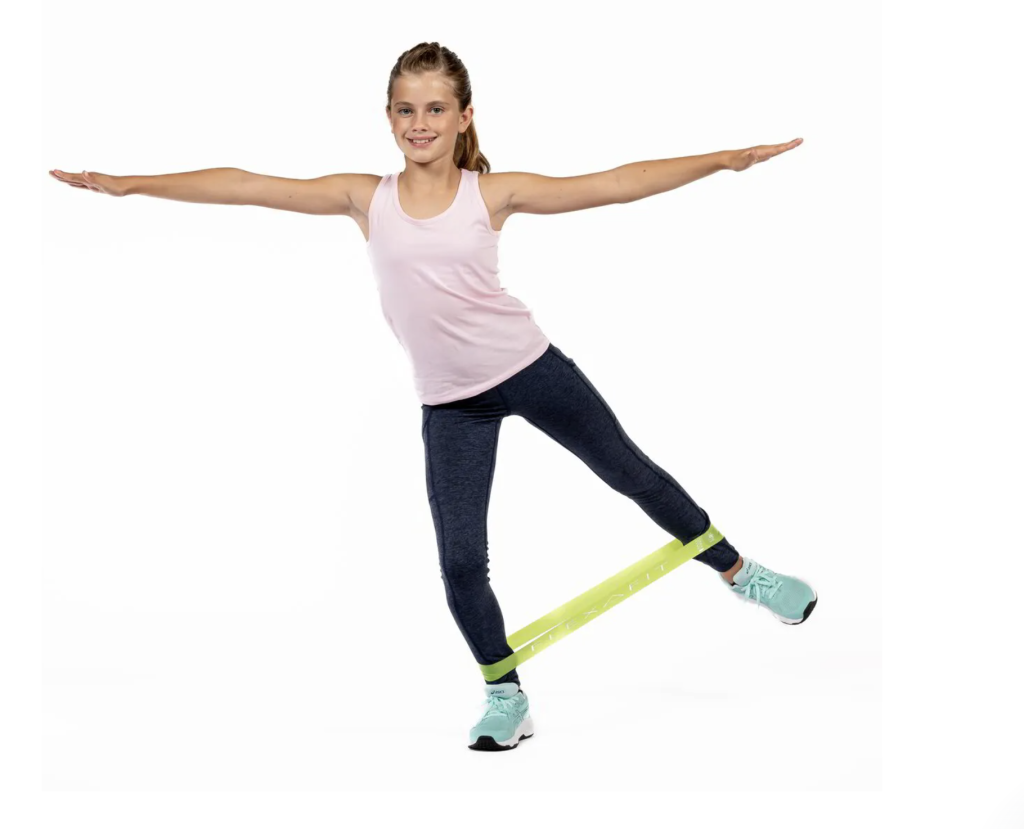
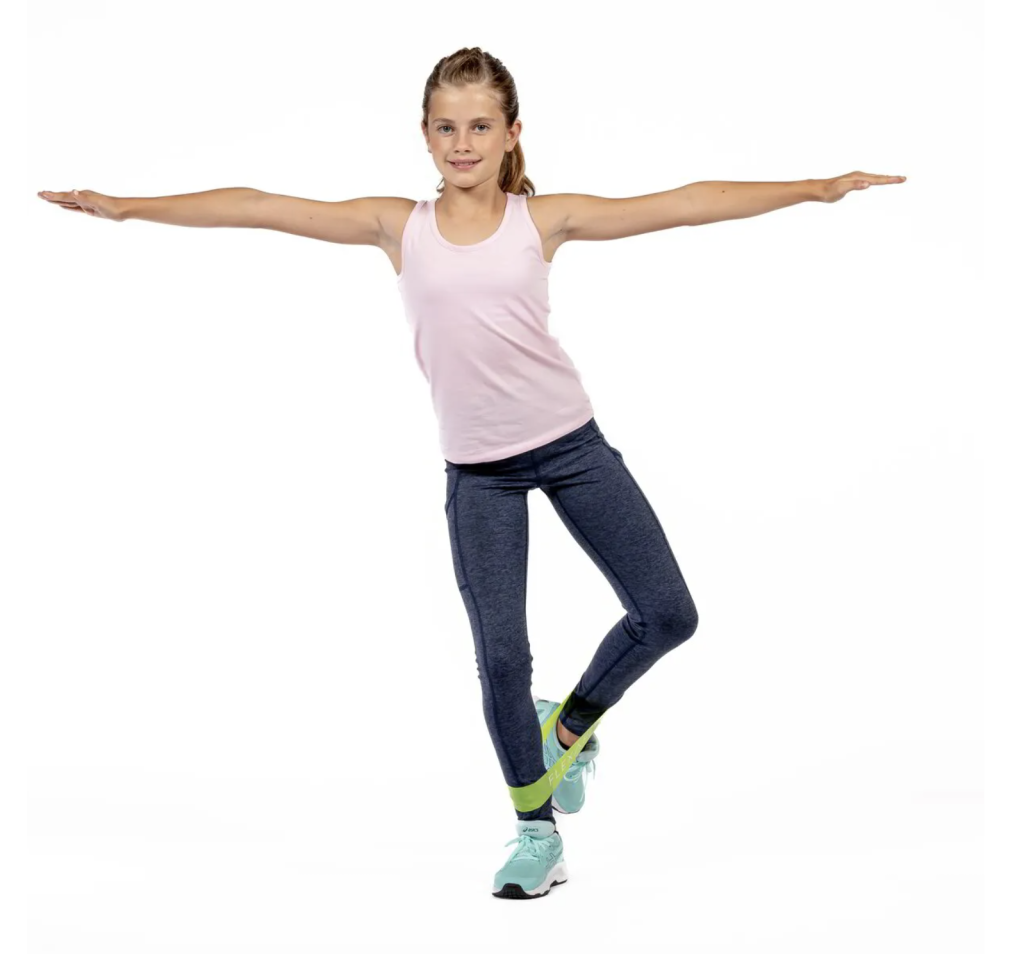
- Resistance Band Exercises for Figure Skaters
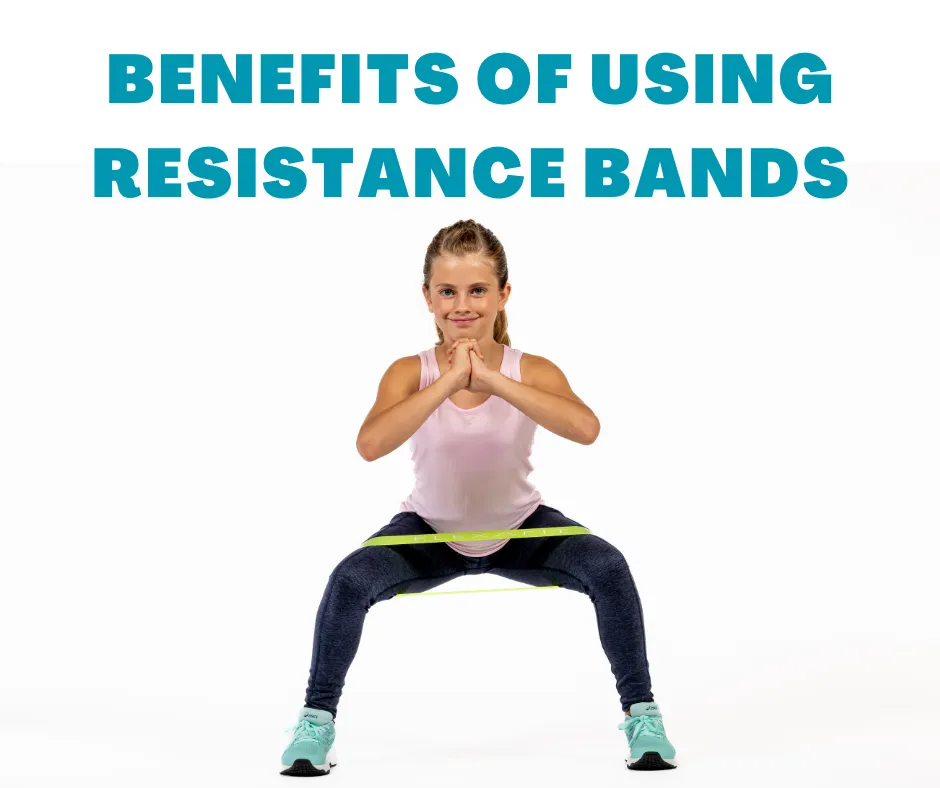
- Hip strength – crab walk squats
- Landing extension with the band
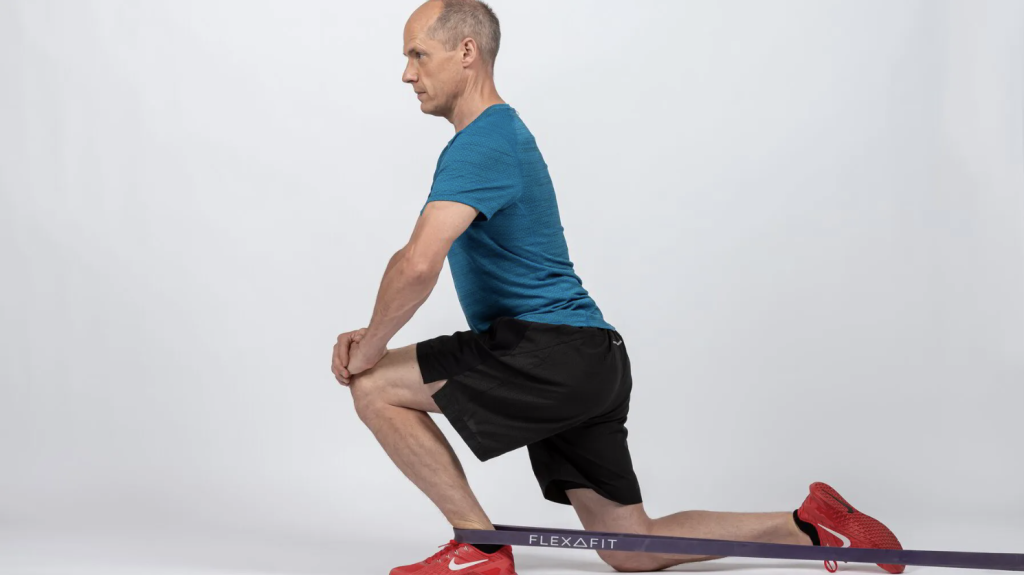
- Kneeling lunge with band pull back
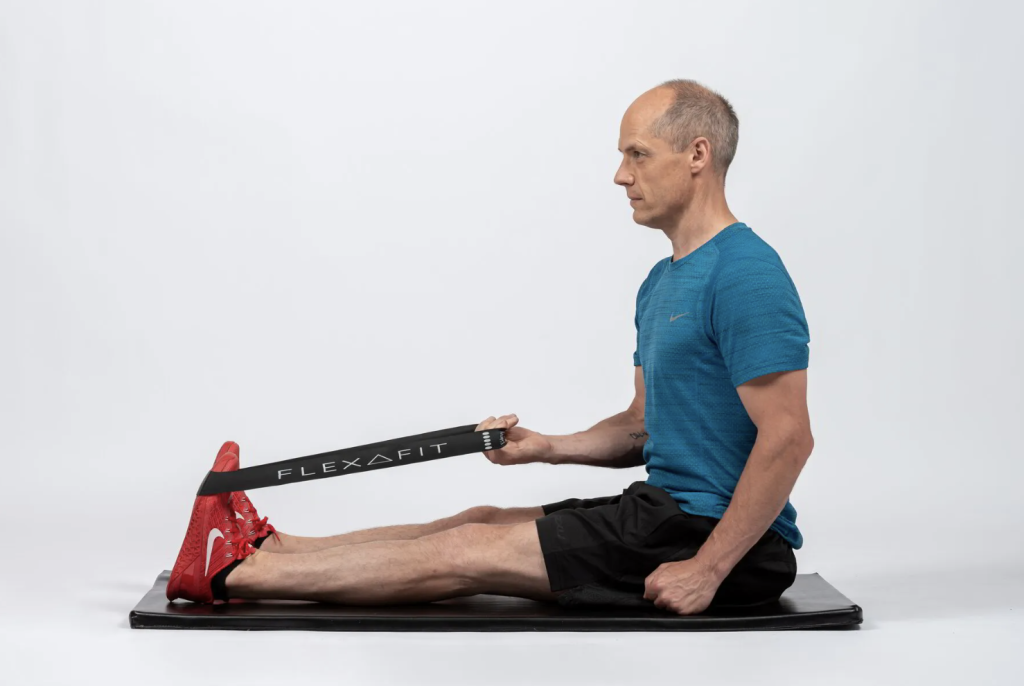
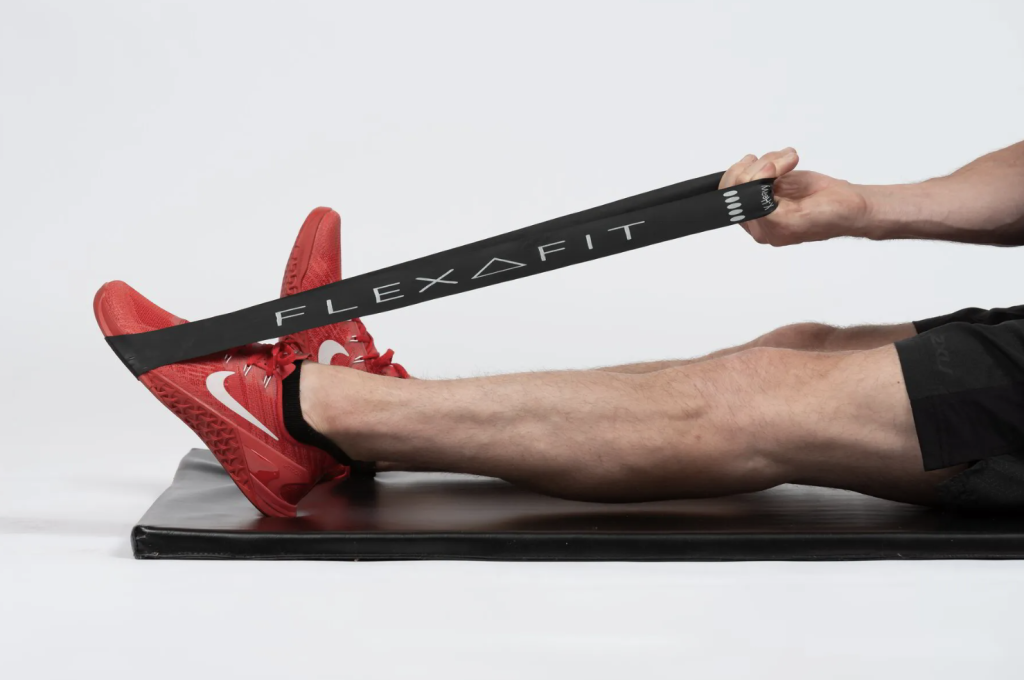
- Seated toe raises/flex with band
- Deep hip muscle strengthening exercises for figure skaters
Want a more structured support with your off-ice training? Join a FLEXAFIT class online today!
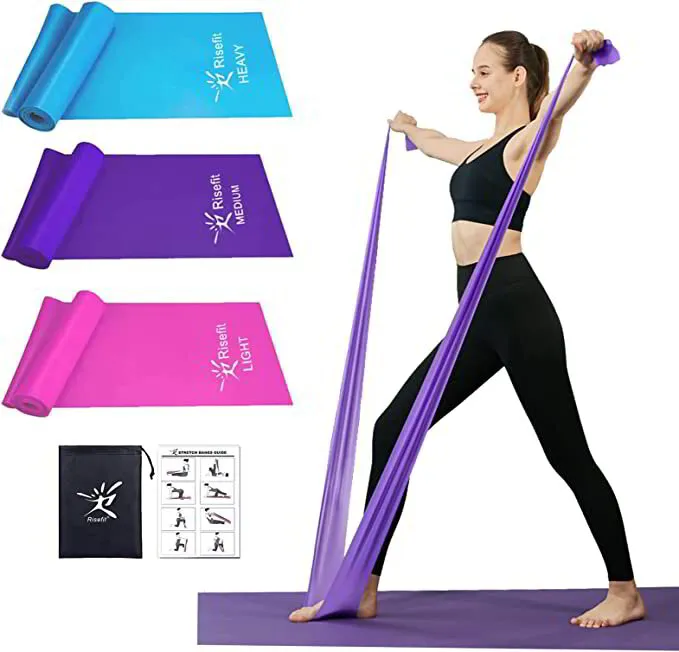
A resistance band is a lightweight elastic band that comes in different resistance levels used to induce muscular contraction. Whether for aesthetic purposes, athletic performance, or physical therapy, resistance bands can help you strengthen and/or stretch your muscles. These resistance bands can often be bought in a set. The four main categories of these bands include light, medium, heavy, and extra-heavy
Improve Your Strength
You can improve your strength with the help of resistance bands, especially if you are a beginner at the gym or doing home workouts. For example, if you can’t do a full pull-up, the band will assist you through the range of motion until you can get to the point where you can do reps on your own.
Having a set of resistance bands with various resistance levels can greatly help you progress throughout your fitness journey. Beginners may use the extra-heavy or heavy band to start with pull-ups and then graduate to a higher level of resistance as their overall body strength improves.
Many resistance band exercises can target several muscle groups at the same time, allowing you to easily get a full-body workout. Depending on the resistance level of the band, your workout can be more challenging, enhancing both physical strength and balance.
Work Your Core
Your body requires stabilization to maintain form during numerous exercises due to the constant tension from the bands. In order to maintain balance, you must engage your core to avoid potential injuries.
You also have to control the resistance from snapping back into place, which creates greater stimulation and strength through the muscle’s full range of motion. The pull of the band makes it harder to cheat through momentum and encourages proper form.
Training Stability
Resistance band exercises are very effective for developing core strength and stability because they engage the “stabilizers” — the muscle groups that support and stabilize the body.
Cost-Effective
Resistance bands can be very cost-effective considering the number of exercises you can perform with them. A set of resistance bands can cost less than $30, which is cheaper than buying individual weights and can deliver comparable results.
This makes them an ideal option for beginners who want an effective home workout setup without the cost of a gym membership.
Good for Post-Injury Strengthening
To stay in great shape, compete well, and avoid frequent injuries, athletes must do the right exercises consistently. After an injury, sports professionals often use resistance bands to help athletes add resistance to movements without placing unnecessary strain on joints.
Resistance bands allow athletes to isolate specific muscles or joints, which may speed up recovery and rebuild strength and flexibility during rehabilitation.
Increase Mobility
Our range of motion diminishes as we age, and many people experience age-related muscle deterioration (sarcopenia). A study by the American Physiological Society found that muscle fibre loss occurs at a rate of nearly 1% per year for people aged 50 and older.
Resistance bands are one of the best tools for improving mobility and flexibility as we age. Because they come in various resistance levels, they are suitable for people who enjoy gentle daily stretching as well as those who need more challenging strength work.
Easy to Transport
Most resistance bands are lightweight and easy to transport — they can fit in a gym bag, suitcase, or backpack with no issue. Many resistance band kits are compact and take up very little space, making them ideal for travellers who want portable workout equipment that isn’t bulky.
Types of Resistance Bands
-
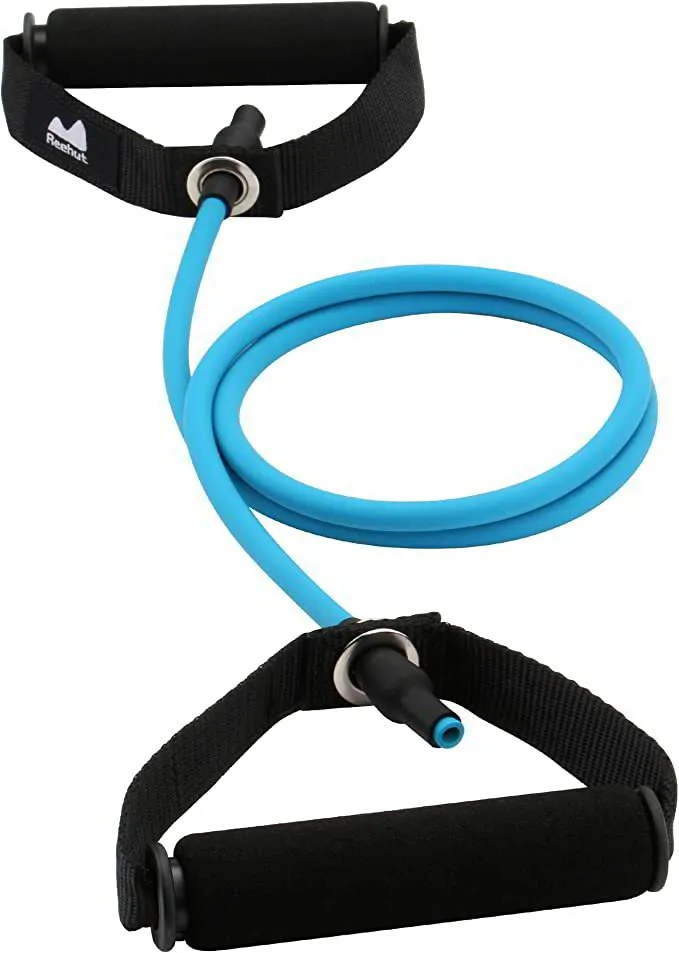
Resistance bands with handles
-
Therapy flat resistance bands
-
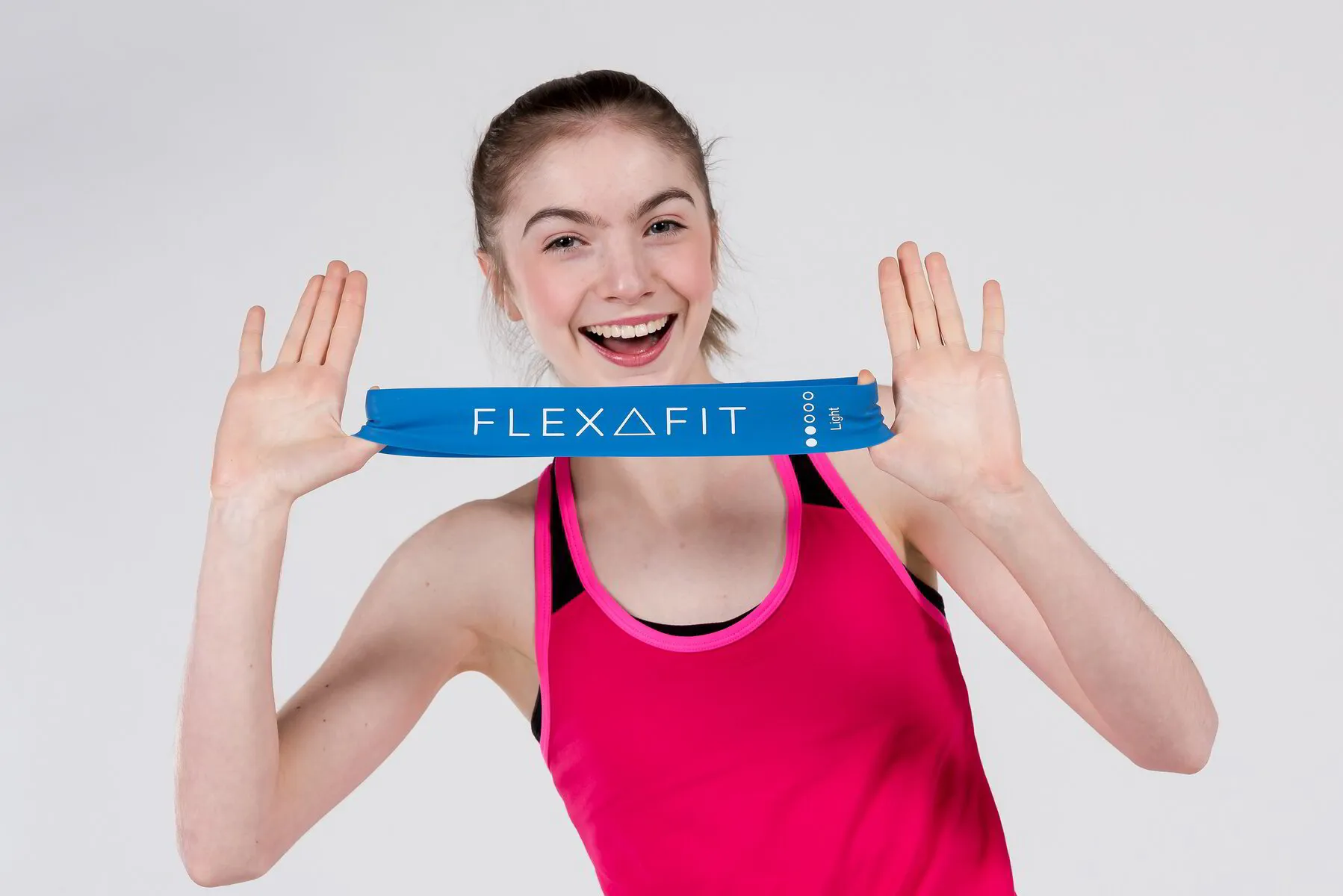
Loop bands
-
Leg and arm tube resistance bands
-
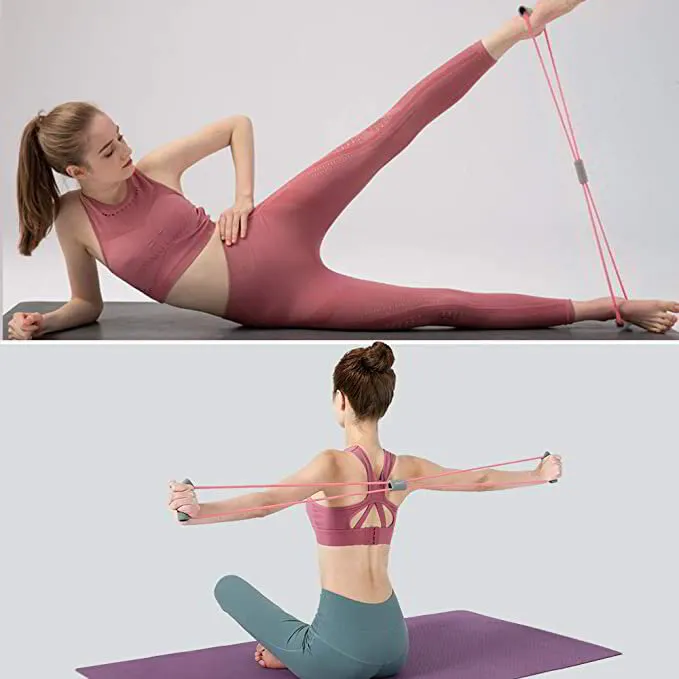
Power and mobility bands
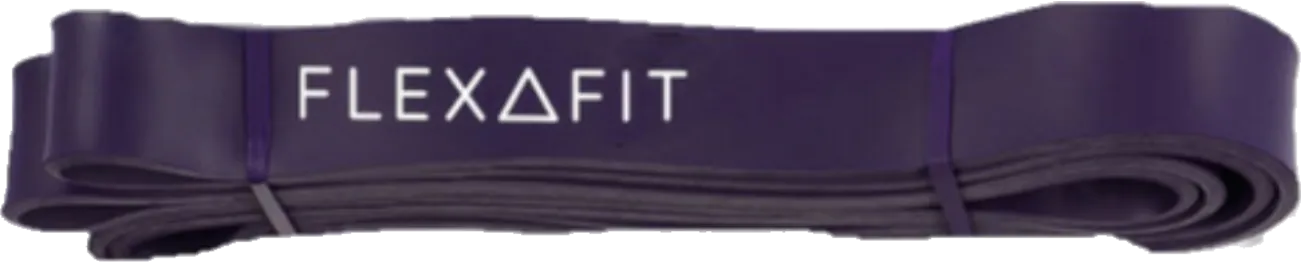
Resistance Band Exercises for Figure Skaters
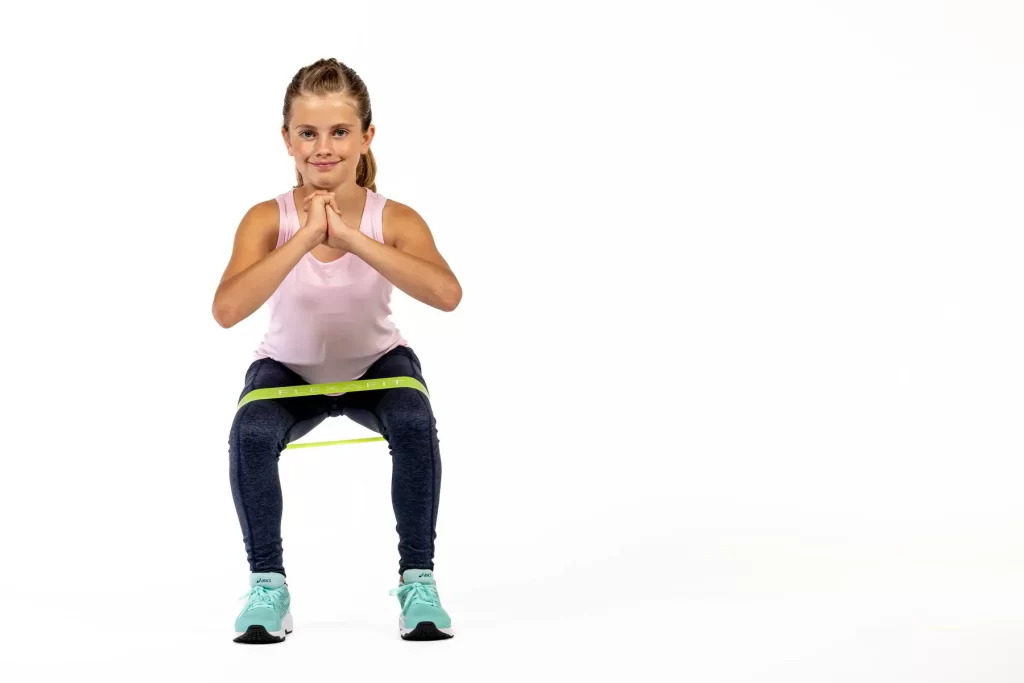
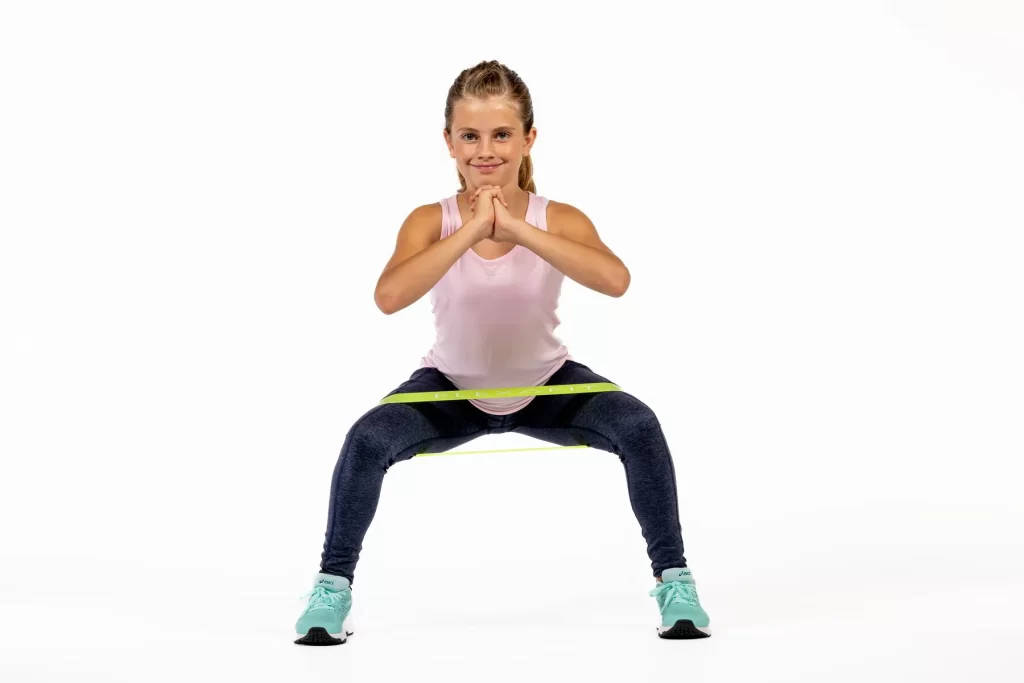
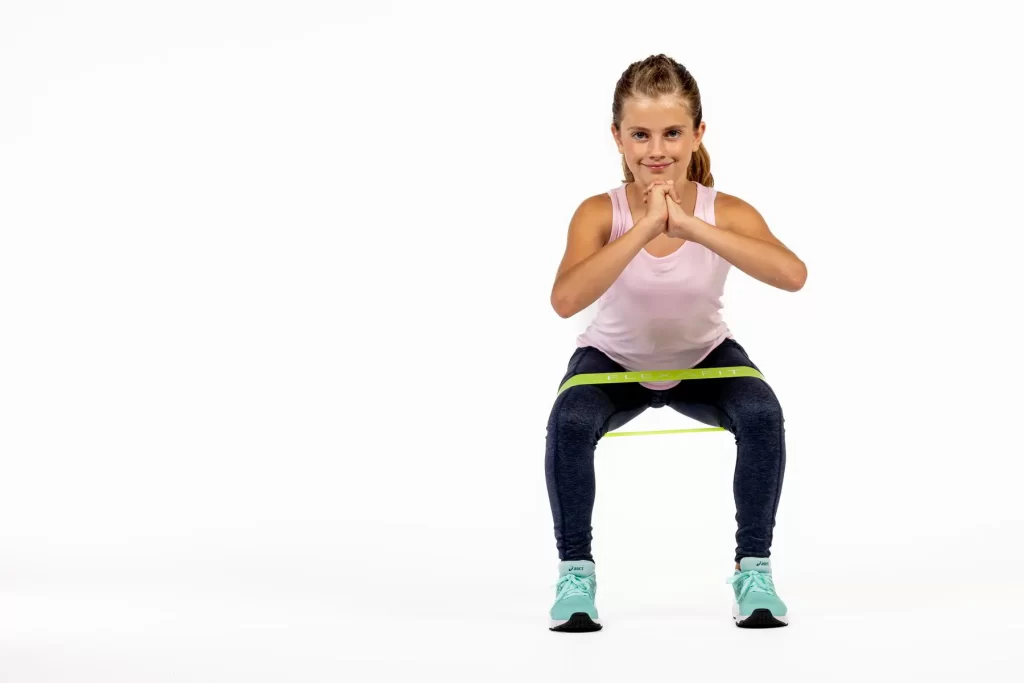
Crab Walk Squats
First place an appropriate-strength loop resistance band above your knees. Lower yourself into a deep squat position with your feet shoulder distance apart, and step your right foot out as far as you can against the resistance of the band. Follow with your left foot to return your feet to shoulder distance apart. Keep stepping sideways for as far as your space allows and then go back with the other foot leading, still facing the same direction.
[20-30 reps each direction]
Get your set of 5 FLEXAFIT Resistance band loops
3. Kneeling lunge with band pull back
Place a thick band around the ankle joint, kneel forward with the knee. The band will pull back, while you try to press forward.
Do 30 sec – 1 min each side.