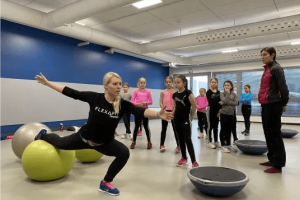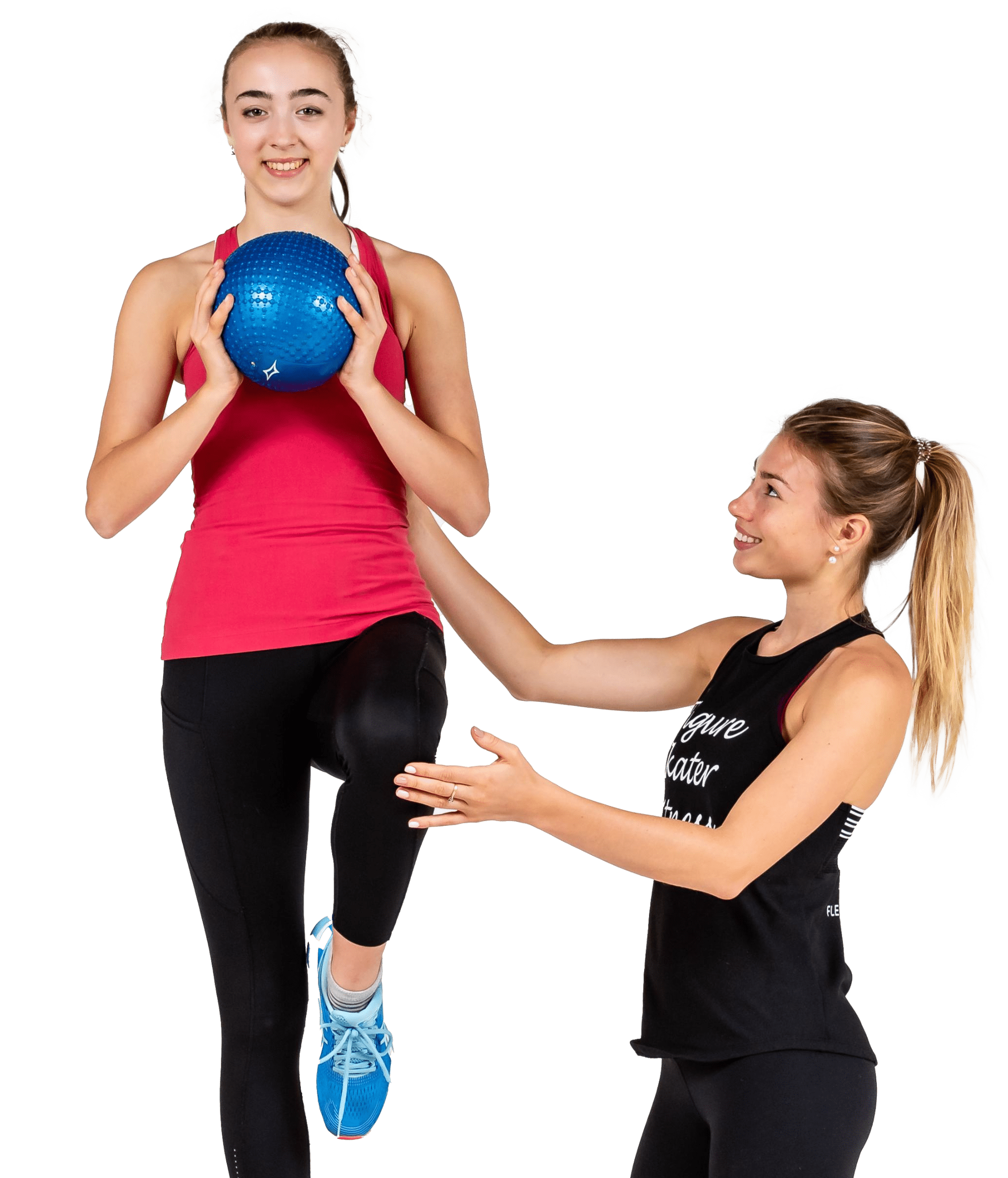
Why and How You Should Strengthen Your Core
Featuring FLEXAFIT Core Training Videos for All Levels
A strong, functional core is essential for athletic performance, efficient movement, and long-term physical health. Whether you’re a competitive figure skater, adult athlete, fitness enthusiast, or someone who simply wants to move better, improving your core strength will dramatically impact your balance, power, posture, and injury resistance.
Yet many people still ask: Where is the core? Why is core strength important? And what are the best core workouts or ab exercises to build strong, stable, functional movement?
This blog breaks down everything you need to know and integrates FLEXAFIT’s targeted video content including beginner, foundation, advanced, and elite-level exercises to support your training.
What Is the Core and Where Is It?
Most people think of the core as the stomach or “six-pack,” but the truth is much more complex. The core is a full 360-degree support system that stabilizes your spine, pelvis, and hips.
Your core includes:
- Rectus abdominis (“six-pack”)
- Obliques (internal/external)
- Transverse abdominis (deep core)
- Lower back stabilizers (multifidus, erector spinae)
- Pelvic floor
- Diaphragm
- Glutes
- Deep hip stabilizers
To help skaters and athletes visualize how these muscles work together, FLEXAFIT’s video “Introducing Functional Core Training and 3 Key Exercises for Skaters (All Levels)” is an excellent foundational resource. This tutorial breaks down what functional core activation feels like and how to begin training it safely.
Why Is Core Strength Important?
Strengthening the core is essential for performance, safety, and everyday movement.
1. Better Posture and Alignment
A strong core supports proper rib and spine alignment, making you more efficient in movement and reducing unnecessary strain.
2. Reduced Injury Risk
Weak abs or poor deep-core activation often leads to:
- Lower back pain
- Hip strain
- Pelvic instability
- Poor jump mechanics
- Overuse injuries
Consistent core training improves stability and decreases compensations.
3. Improved Performance in All Sports
In skating specifically, the core affects:
- Jump takeoffs and landings
- Spin positions
- Air position stability
- Edge quality
- Endurance
4. Everyday Functional Strength
From sitting to lifting to walking, your core supports every movement you make. Strong cores = strong lives.
5. Women’s Health and Pelvic Floor Support
Pelvic stability is essential for longevity, especially for female athletes.
Beginners and returning athletes should follow “Beginner–Foundation: Deep Core and Pelvic Floor Strength for Skaters Workout” to build safe foundational strength.
Signs of a Weak Core
You may need core-strengthening if you notice:
- Lower back discomfort during movement
- Difficulty balancing
- Hip or knee collapse when landing jumps or squatting
- Arching the back during ab exercises
- Shaking or collapsing during planks
- Fatigue during simple stability drills
FLEXAFIT’s “Advanced: Off-Ice Deep Core Tone & Strengthen Pilates/Yoga Style Flow Workout” is excellent for identifying weak links and improving control.
How to Strengthen Your Core Effectively
Core training is most effective when built progressively:
stability → strength → dynamic power.
Below is the recommended progression featuring coordinated FLEXAFIT videos.
Phase 1: Foundation — Build Stability
Before adding intensity, you must learn proper deep-core activation.
1. Diaphragmatic Breathing
This activates the transverse abdominis and pelvic floor — your body’s natural “corset.”
Pair this with the deep core & pelvic floor workout (Beginner–Foundation level) as an introduction to safe activation.
2. Dead Bug
This highly effective anti-extension exercise teaches spinal stability.
Use the FLEXAFIT video: “Dead Bug with Exercise Ball”
This variation adds resistance and neuromuscular control, perfect for beginners and advanced athletes alike.
3. Forearm Plank
A simple but powerful stability builder.
For elite athletes, integrate “Plank Knee Drive Axel Isolation Drill (Elite)” to increase control, alignment, and jump-specific strength.
Phase 2: Strengthening — Add Controlled Movement
Once stability is established, incorporate full-range movement.
4. Bird Dog
Enhances spinal control and cross-body coordination.
Build up to this Advanced Bird Dog with Knee Tap Variation exercise to reinforce technique.
5. Side Plank
Targets obliques and prevents hip collapse.
Variations include leg lifts or rotational reaches included in FLEXAFIT’s “Advanced: Side plank with band pull apart exercise demonstration”.
6. Glute Bridge / Hip Raises
Glutes are essential core muscles.
Use the FLEXAFIT video “Advanced: Single Leg Glute Bridge Raises Exercise” to challenge stability, pelvic control, and lower-body symmetry.
Phase 3: Dynamic Power — Build Functional, Sport-Specific Strength
Dynamic core exercises help athletes handle high-force movement such as jumps, spins, and deep edges.
7. Reverse Crunch (Lower Ab Exercise)
Focuses on lower abs without overusing hip flexors.
Great for skaters who struggle with arching in jump takeoffs.
8. Russian Twists
Enhances rotational control.
Keep movements slow and controlled to avoid over-rotation.
9. Hollow Body Hold or Rockers
A fundamental gymnastics & skating drill to improve air position.
Skaters training at an advanced or elite level should incorporate the FLEXAFIT’s “Dynamic Air Position Core Exercise (Advanced–Elite)” video for improved rotational alignment and stability.
Core Workouts at Home (10–12 Minutes)
No equipment required — modify using FLEXAFIT video progressions.
Warm-Up (1 minute)
- Diaphragmatic breathing
- Cat-cow
- Marching bridge
Circuit (Repeat 2–3x):
- Dead Bug with Exercise Ball – 10/side
- Forearm plank – 20 seconds
- Side plank – 20 seconds/side
- Single-leg glute bridge (Advanced video) – 10/side
- Reverse crunch – 12 reps
- Bird dog – 10/side
Finishers:
- Mountain climbers – 20 slow reps
- Hollow hold – 15 seconds
- Add Dynamic Air Position Core Exercise for skaters needing rotational strength
Common Core-Training Mistakes
1. Overusing hip flexors
Occurs when lower abs and pelvic floor aren’t activating. Slow down and refocus on form.
2. Moving too quickly
Speed reduces deep-core activation. Control is key.
3. Neglecting back and glute stabilizers
Your core is 360°, not just the front.
4. Holding your breath
Breathing is part of core stability. Use the foundation videos to correct this.
5. Only doing “ab workouts” instead of true core training
Weak deep-core muscles cannot be fixed with crunches alone. Use progressions from beginner → elite videos.
How Often Should You Train Your Core?
For best results:
- 3–4 core sessions per week
- 5–15 minutes per session
- Combination of stability + strength + dynamic drills
- Add sport-specific exercises before on-ice or off-ice training sessions
Skaters benefit significantly from adding dynamic warm-ups for improved jump mechanics.
How to Know Your Core Is Getting Stronger
You’ll start to notice:
- Better balance
- Improved posture
- Less lower back tension
- Stronger jump takeoffs and landings
- Reduced knee or hip collapse
- Greater endurance during long programs
- The ability to hold air positions more cleanly
If you can maintain a neutral spine during the Dead Bug with Ball and Plank, your deep core is significantly improving.
Final Thoughts
Understanding why core strength is important is the first step. But knowing how to train it—progressively, intentionally, and functionally—is the key to long-term results.
Your core is more than your abs. It is your body’s stabilizing powerhouse.
Training it gives you:
- Better movement
- Greater athletic performance
- Injury resistance
- Confidence on and off the ice
Whether you’re following deep core and pelvic floor strength videos, Pilates/yoga flow for advanced skaters, or elite plank axel isolation drills, FLEXAFIT offers one-on-one instruction and targeted, progressive programs that meet you exactly where you are.

You may also like

It’s Post-Season, How do I train now?
Ultimate Guide to Figure Skating Spins