Ultimate Guide to Figure Skating Spins
Spins are one of the defining elements of figure skating — dynamic, expressive, and deeply athletic. They require an intricate blend of balance, strength, flexibility, precision, and fearlessness. Whether you’re beginning to learn how to spin, refining advanced spin variations, or perfecting control and centering, this guide provides everything you need to practice and elevate your spins both on and off the ice. Throughout this article, we’ve also incorporated FLEXAFIT’s on-ice and off-ice video tutorials so you can visually connect technique to movement and build better muscle memory.
Types of Figure Skating Spins
Spins fall into three primary families — upright, sit, and camel spins. Each has its own technical focus, difficult variations, and progression path. Below, you’ll find explanations of each major spin type, plus integrated FLEXAFIT videos that demonstrate key positions, entries, and transitions.
Upright Spin
Upright spins keep the torso in a vertical position. Skaters typically learn these first because they develop balance, rotation control, and edge awareness.
Upright Spin Types
Two-Foot Spin
Ideal for new skaters starting to understand the concept of rotation and balance. Both feet stay on the ice while gradually shifting weight toward the spinning foot.
One-Foot Spin
The foundation of all spins on a single foot. This is where skaters learn pressure control on the blade’s sweet spot.
Scratch Spin
A classic fast spin where the skater pulls the free leg tightly across the skating leg to gain speed. Body alignment is crucial for creating a tight rotational axis. Can be completed on the forward or backward foot.
Biellmann Spin
An advanced spin where the skater lifts the blade above their head from behind. This requires back extension, shoulder mobility, and hip flexibility.
“I” Spin
The free leg lifts straight upward to create a long, vertical line resembling the letter “I.” This position demands strong core stability and hamstring flexibility.
“Y” Spin
A lateral variation where the skater lifts the free leg to the side to create a “Y” shape. This requires deep hip opening and strength.
How to Do a Two-Foot Spin in Figure Skating?
A two-foot spin is the stepping stone to all upright spins:
- Pivot from forward to backward.
- Keep both blades close to the spinning center.
- Use your arms to initiate rotation.
- Maintain equal pressure or slowly shift to the spinning foot.
How to Do a One-Foot Spin in Figure Skating?
A one-foot spin teaches fundamental rotational mechanics. To learn the basic movement on ice:
- Start with a controlled entry from a forward edge or three-turn.
- Find the “sweet spot”— the curved area under the ball of your foot where the blade naturally rotates.
- Engage your core and keep your arms stable during the first few rotations.
- Gently pull your arms inward to increase speed without sacrificing balance.
- Finish on a controlled exit edge.
Try off-ice first:
Off-Ice Forward Upright Spin on Spinner (Foundation)
Great for developing balance and rotational awareness before transitioning on ice.
Watch this FLEXAFIT beginner demo:
On-Ice Forward Upright Spin with Arms Above Head (Beginner)
This video shows how variations of arm placement influence balance and center.
Sit Spins and Variations
Sit spins require the skater to bend deeply into a seated position while rotating. The hips lower below knee level, and the core must stay engaged to keep the spin centered.
Sit Spin Variations
Forward Sit Spin
Performed with the free leg extended forward, parallel to the ice.
Back Sit Spin
A backward rotation version where control of the back outside edge is key.
Broken Leg Sit Spin
The free leg bends at the knee and rotates inward toward the skating leg, creating an asymmetrical position where the free foot is pulled close to the ankle or calf of the skating leg.
Pancake Spin
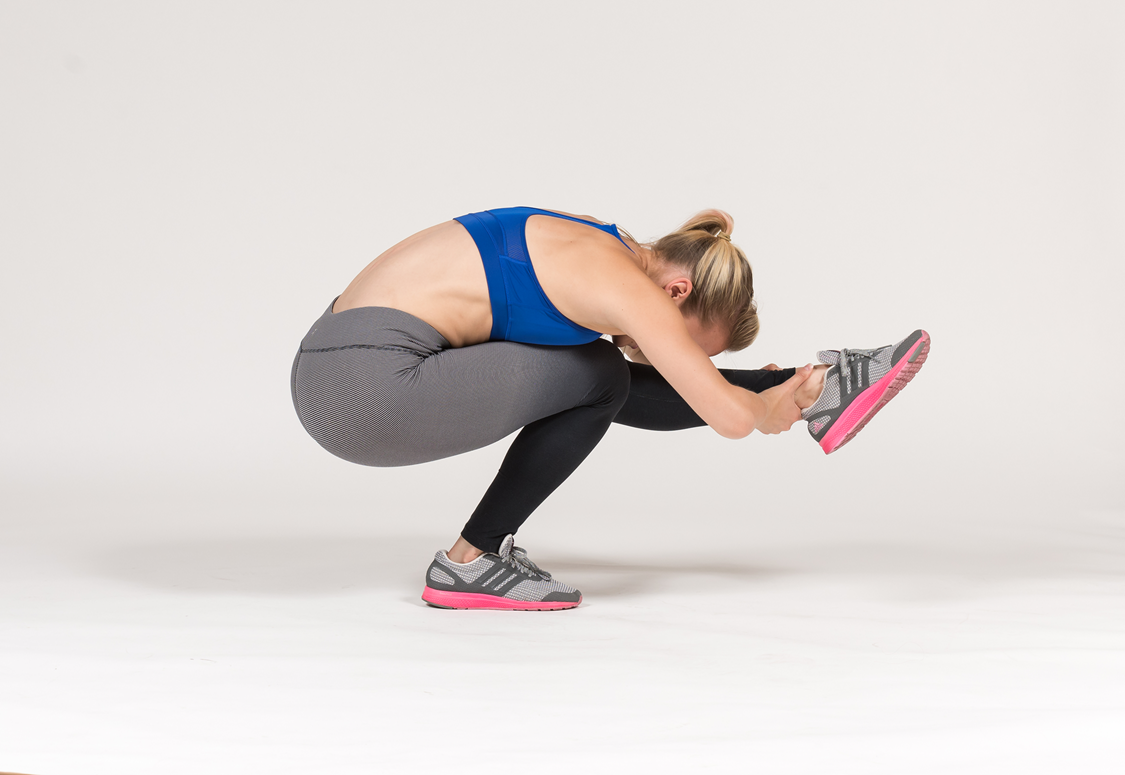
The free leg folds tightly across the skating thigh while the skater bends forward from the hips, creating a fully compressed position in which the torso lies over the free leg.
Tuck Spin
Both arms wrap around the skating leg while the skater pulls the upper body toward the knee, and the free leg tucks behind the skating leg.
Build the position off-ice:
Off-Ice Back Sit Spin ½ Turn Check Drill (Foundation) — strengthens control for back sit variations.
How to Do a Sit Spin in Figure Skating?
To master a sit spin — one of the most aesthetically powerful spins — follow this technical progression:
- Enter in a low position with a bent skating leg to help establish your center.
- Continue to bend your knees deeply, lowering your hips while maintaining chest and back alignment.
- Extend the free leg forward (or into a difficult variation).
- Keep your torso stable and avoid collapsing forward.
- Rise slowly and exit on a controlled outside edge.
Watch this FLEXAFIT on-ice tutorial:
On-Ice Sit Spin Snap Position Tutorial (Beginner–Foundation)
Shows how to achieve clean snap and position stability.
Camel Spin
Camel spins combine power, balance, and flexibility. The upper body leans forward horizontally while the free leg extends behind in a long line.
Camel Spin Variations
Basic Camel Spin
Torso and free leg create a horizontal line for clean aesthetics and speed.
Sideways Camel
Back and shoulders stack vertically, creating a clean line towards the free foot.
Upwards Camel
Back and shoulders arch upward horizontally with the ice, creating a dramatic backward curve.
How to Do a Camel Spin in Figure Skating?
To learn how to do a camel spin:
- Begin with a forward entrance like a three-turn or outside edge entry.
- Extend the free leg behind you and hinge at the hips until your body is parallel to the ice.
- Keep shoulders square and core engaged to prevent traveling.
- Maintain a strong back and glutes to hold the free leg steady.
- Bring your arms in gradually once your position is secure.
Watch this FLEXAFIT standstill tutorial:
Forward Camel Spin from Standstill (Foundation) — ideal for learning clean entries.
Other Spins
Beyond the three main positions, skaters perform an array of additional spins:
- Flying Spins (flying sit, flying camel, flying upright)
Watch: On-Ice Introductory Flying Sit from Standstill (Advanced) - Combination Spins
- Change-Foot Spins
Watch: On-Ice Combo Spin Forward to Backward Transition Tutorial (Foundation–Advanced) - Layback and Sideways Leaning Spins
These variations offer versatility and allow skaters to customize choreography and add level difficulty.
Enhance with this FLEXAFIT mobility drill:
Upper Body Layback Extensions (Foundation–Advanced)
Perfect for improving backbend strength for layback positions.
How to Practice Figure Skating Spins Off Ice?
Off-ice training is vital for improving strength, stability, flexibility, and air awareness. These skills directly transfer to stronger, more centered spins on the ice. FLEXAFIT offers extensive off-ice programming for skaters of all levels.
Core Activation
Stable rotation begins with a strong center:
- Hollow holds
- Rotational core twists
- Dead bugs
Balance & Proprioception
These help skaters maintain alignment during rotation:
- BOSU drills
- Single-leg balance clocks
- T-hold variations
Try this:
Off-Ice Camel to Sit Position on BOSU (Advanced) — excellent for building dynamic balance.
Off-Ice Spin Drills
These mimic on-ice rotations:
- Off-Ice Forward & Backward Upright Spin Class
- Off-Ice Upright Spin H to Cross Position (Foundation)
- Forward to Back Change Foot Sit Spin Walk-Through (Advanced)
Flexibility & Mobility
Flexibility improves spin quality:
- Standing Forward Fold with Elevated Shoulder Stretch
ideal for Biellmann and layback positions. - Y-Stand Hold (Foundation–Advanced)
builds strength and mobility for upright spin variations.
These exercises create stronger body awareness, reduce wobbling, and help skaters find their center faster.
The History of Figure Skating Spins
Spins have evolved alongside skating itself. Early skaters used simple rotations while tracing figures on outdoor ice. As skating shifted toward artistry in the 19th and 20th centuries, skaters like Sonja Henie and Cecilia Colledge pushed creative boundaries with more expressive positions. Modern athletes have expanded their spin repertoire with the introduction of the International Judging System to include flying entries, difficult variations, hyper-flexibility positions, and rapid transitions. With today’s equipment and training methods, especially structured off-ice conditioning like FLEXAFIT, spins continue to reach new levels of intricacy and speed.
Work One-on-One with a FLEXAFIT Specialist
If you’re serious about improving your spins, nothing accelerates progress like personalized guidance. A FLEXAFIT specialist can help you:
- Analyze your spin mechanics
- Improve centering and alignment
- Build flexibility for variations like laybacks and Biellmann’s
- Strengthen the muscle groups needed for stability
- Create a personalized spin training plan (on-ice + off-ice)
- Progress safely into flying or combination spins
Book a one-on-one session to get tailored corrections, targeted drills, and individualized coaching.
Subscribe to FLEXAFIT Edge for More Training & Videos
FLEXAFIT Edge gives you access to:
- Full spin tutorial libraries
- Off-ice conditioning classes
- Exclusive flexibility routines
- Step-by-step breakdowns of advanced spins
- On-ice technique demonstrations
- Progressive strength and balance programs
If you loved the videos in this guide, FLEXAFIT Edge gives you hundreds more to level up your skating.
Conclusion
Spins are equal parts athleticism, artistry, and technical precision. With the right combination of on-ice practice, off-ice conditioning, and expert guidance, every skater can develop powerful, expressive, and beautifully centered spins. Use the tutorials and exercises in this guide to enhance your control, improve your rotational positions, and build confidence in all spin positions.
With FLEXAFIT’s targeted training and structured approach, your spins will become stronger, faster, and more technically refined than ever.
FAQs
How to Improve Your Figure Skating Spins?
Focus on balance, blade pressure, and posture. Build strength through off-ice conditioning and use tools like spinners to refine rotational control.
How to Spin Faster?
Pull your arms and free leg in toward your centerline. A tight core and vertical alignment allow for quicker rotation.
How to Center Spins in Figure Skating?
Practice finding and maintaining pressure on the blade’s sweet spot. Keep your hips and shoulders square, avoid dropping into the heel, and build consistency through slow, controlled repetitions.

You may also like

It’s Post-Season, How do I train now?
Why and How You Should Strengthen Your Core